Smoke and Vape | The Counterproductive Nature of Demonizing

In recent years, the global discourse surrounding vape has grown increasingly polarized, with critics framing them as a public health menace. Yet mounting evidence from rigorous scientific studies reveals a more nuanced reality: While not entirely risk-free, vape represent a substantially safer alternative to combustible tobacco and a viable tool for smoking cessation. Overly simplistic vilification risks obstructing harm reduction strategies, potentially denying millions of smokers access to life-changing interventions.
1. The Science of Harm Reduction: Smoke and Vape ,Why Vaping Differs Fundamentally
The critical distinction lies in the absence of combustion—the primary driver of smoking-related diseases. Traditional cigarettes generate over 4,000 chemicals through tobacco burning, including 69 carcinogens like tar, benzene, and nitrosamines. In contrast, vape heat nicotine-containing liquids to produce aerosols, eliminating pyrolysis and its toxic byproducts.
Landmark studies underscore this divergence:
The FDA’s meta-analysis of 5,000+ global studies found e-cigarette users exhibit 55–95% lower levels of carcinogenic biomarkers (e.g., benzene, acrolein) in urine compared to smokers.
Research from Italy’s University of Catania demonstrated that vape aerosol has 1/300th the cytotoxicity of cigarette smoke and lacks mutagenic properties.
Experiments at Sun Yat-sen University revealed that even at 15 times the concentration of cigarette smoke, e-cigarette aerosols caused significantly less cellular damage.
This evidence dismantles the false equivalence often drawn between vaping and smoking, highlighting the transformative potential of replacing combustion with vaporization.
2. Smoking Cessation: Can vaping cause lung cancer?
For smokers struggling with nicotine dependence, vape offer a pragmatic pathway to harm reduction. Clinical data reveals:
A University College London study found vaping doubles quit rates compared to nicotine replacement therapies (39.1% vs. 20.8%).
Longitudinal research in the American Journal of Health Behavior showed over 50% of vapers abstained from cigarettes entirely within a year, with others reducing consumption by 80% or more.
Contrary to misconceptions about nicotine’s role, the NIH and journal Addiction emphasize that while nicotine is addictive, it is not the primary carcinogen. The real culprits—tar and nitrosamines—are absent in non-combustible nicotine delivery. This distinction underscores vaping’s value as a transitional tool for smokers unwilling or unable to quit nicotine entirely.
3. Secondhand Exposure: Vaping vs Cigarettes
Public concerns about passive vaping often conflate it with traditional secondhand smoke. However, empirical data reveals stark contrasts:
Italian researchers found that four breaths of cigarette smoke induced cell death, whereas 300 breaths of vape aerosol showed no detectable genetic toxicity.
CDC analyses detected 97.8% lower levels of tobacco-specific nitrosamines (NNAL) in vapers’ urine compared to smokers, reflecting minimal bystander exposure risks.
While no exposure is ideal, these findings suggest that vaping could reduce collateral harm in environments where smoking persists.
4. Toward Rational Regulation: Vaping Facts
Leading health authorities advocate for evidence-based policies:
Public Health England reaffirmed in 2015 that vaping is 95% less harmful than smoking.
The FDA now regulates vape as part of its Comprehensive Plan for Tobacco and Nicotine Regulation, prioritizing product standards and youth access restrictions while acknowledging vaping’s harm reduction role.
Market trends reflect shifting demand: 29.1 million users of reduced-risk products were reported by British American Tobacco in 2024, signaling global recognition of alternatives to combustion.
Critics rightly note potential cardiovascular or respiratory concerns, but these risks pale in comparison to smoking’s 480,000 annual U.S. deaths. As tobacco harm reduction pioneer Dr. Riccardo Polosa argues, “The relative safety of vaping isn’t debatable—it’s measurable.”
Pragmatism Over Perfection
Public health thrives on incremental progress, not ideological purity. While underage vaping demands stringent regulation, denying adult smokers access to safer alternatives perpetuates the status quo of preventable disease. By differentiating between nicotine use and combustion-driven harm, policymakers can save lives without endorsing risk-free behavior—a middle path where science, not stigma, guides the way.
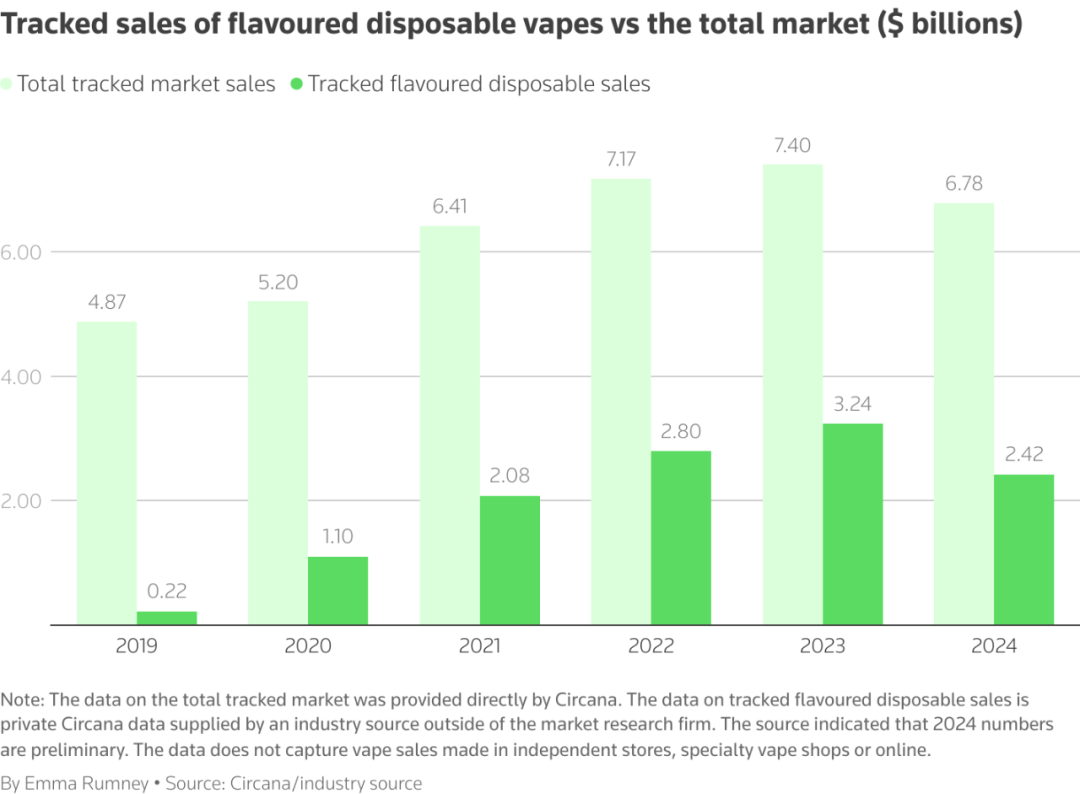
Illicit Vape Sales in the U.S. Hit $2.4 Billion in 2024 Amid Regulatory Gaps