Essential Vaping Knowledge: A Must-Read Guide for Users (1)
The vape industry operates under a mandatory licensing framework, requiring three core permits: the Tobacco Monopoly Manufacturing License, Tobacco Monopoly Wholesale Distribution License, and Tobacco Monopoly Retail License. Mastery of application procedures and compliance requirements for these permits is mission-critical. Regulatory landscapes vary significantly across jurisdictions, with most nations now categorizing vape products under tobacco monopoly governance. From production permits to retail certifications, regulatory compliance forms the cornerstone of sustainable operations, while stringent regulations also ensure product quality assurance and consumer protection mechanisms.
PMTA (Pre-Market Tobacco Product Application)
Formally titled the "Tobacco Product Marketing Authorization," the PMTA constitutes a mandatory regulatory requirement under Section 910(a)(2) of the U.S. Federal Food, Drug, and Cosmetic Act (FD&C Act). All novel tobacco products introduced after February 15, 2007, including vaping devices, must undergo rigorous scientific review and obtain formal authorization from the U.S. Food and Drug Administration (FDA) prior to commercial distribution.
Regulatory Expansion (2016 Deeming Rule)
On May 10, 2016, the FDA issued the Deeming Tobacco Products Regulation, which took effect on August 8, 2016. This landmark regulation extended the agency's jurisdiction to previously unregulated tobacco products, explicitly categorizing vapes, cigars, hookahs, and pipe tobacco under the PMTA framework. Consequently, all vaping products became subject to full PMTA compliance requirements.
EU TPD (Tobacco Products Directive)
The European Union's legislative framework for tobacco and nicotine-containing products is defined by Directive 2014/40/EU, commonly referred to as the TPD. Implemented in 2014, this directive governs both traditional combustible cigarettes and next-generation products, including vapes and heated tobacco (HTP).
TPD3 Revision Status
Since 2021, the European Commission (EC) has been developing the TPD's third revision (TPD3). As of the latest regulatory updates, TPD3 remains under technical evaluation, with stakeholder consultations ongoing to address novel product categories and nicotine concentration limits.
2.Types of Vapes
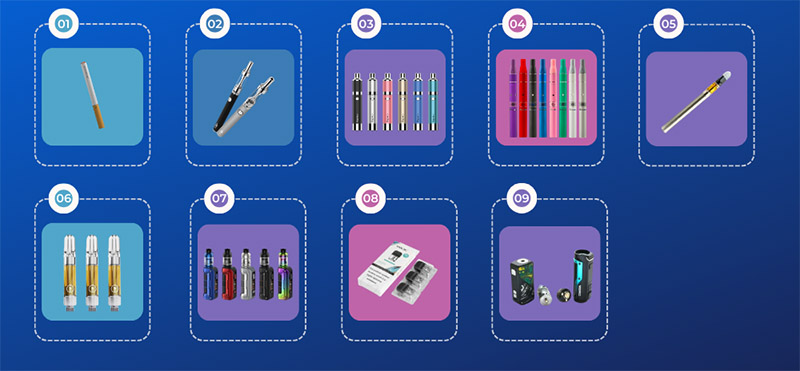
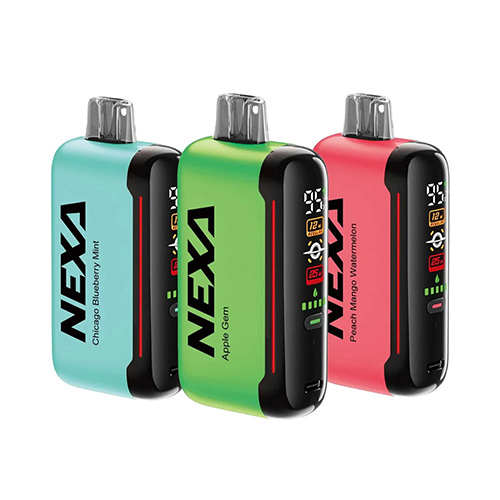
1) Disposable Vapes
Functionality:Pre-filled, non-rechargeable devices designed for single-use operation. Activated via inhalation, they require no maintenance or setup.
Key Differentiators:
Zero maintenance or refilling
Compact, ultra-portable designs
Fixed nicotine strength (typically 20–50mg/mL salts)
Pros:
✅ Immediate usability for beginners
✅ No charging/refilling hassles
✅ Wide flavor selection (outside regulated markets)
Cons:
❌ High long-term cost (per-unit pricing)
❌ Environmental concerns (non-recyclable lithium batteries)
❌ Limited performance (low vapor production)
2) Pod Systems
Functionality:Hybrid devices combining a rechargeable battery with replaceable pods. Two subtypes dominate:
Closed Pods: Pre-filled pods
Open Pods: Refillable pods
Key Differentiators:
Balance of convenience and customization
Pros:
✅ Portability with moderate vapor output
✅ Lower cost than disposables (open systems)
✅ Beginner-friendly interface
Cons:
❌ Closed pods limit flavor/nicotine choices
❌ Pod leakage risks (poor QC models)
❌ Limited coil longevity (7–14 days avg.)
3)Refillable Mod Systems
Functionality:Customizable tanks/RDAs (Rebuildable Dripping Atomizers),Variable wattage/temperature control,Interchangeable 18650/21700 batteries
Key Differentiators:
Supports DIY coil building and e-liquid mixing
Pros:
✅ Superior vapor production and flavor
✅ Cost-effective long-term (bulk e-liquid)
✅ Customizable nicotine delivery (0–20mg/mL)
Cons:
❌ Steep learning curve (ohm’s law, wicking)
❌ Bulkier designs (vs. disposables/pods)
❌ Higher upfront investment (50–50–200+)
4). Heat-not-Burn (HnB) Devices
Functionality:Heats processed tobacco sticks (e.g., IQOS HEETS) to 350°C without combustion.
Key Differentiators:
Uses real tobacco (unlike e-liquid vapes)
FDA-approved as MRTP (Modified Risk Tobacco Product)
Pros:
✅ Mimics traditional smoking rituals
✅ Lower carcinogens vs. combustible cigarettes
Cons:
❌ Limited availability (banned in some countries)
❌ Proprietary consumables (brand-locked sticks)
❌ Residual odor compared to e-liquid vapes
5). Cig-a-likes
Functionality:First-gen devices resembling traditional cigarettes. Often cartomizer-based with automatic draw activation.
Key Differentiators:
Ultra-slim profiles (8–10mm diameter)
Low nicotine delivery (6–12mg/mL freebase)
Pros:
✅ Discreet public usage
✅ Familiar cigarette-like experience
Cons:
❌ Obsolete technology (poor battery life)
❌ Limited vapor/flavor performance
6). Vaping Inhalation Techniques Classification:
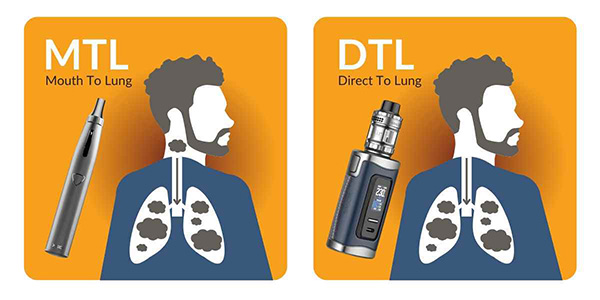
MTL (Mouth-to-Lung):
A two-stage inhalation method where vapor is first drawn into the mouth cavity, then inhaled into the lungs. Primarily suited for low-wattage devices and nicotine salt users, particularly those transitioning from traditional cigarettes or pursuing smoking cessation.
DL (Direct-to-Lung):
A single-step inhalation technique where vapor is drawn directly into the lungs, bypassing oral retention. Optimized for high-power, low-ohm setups (0.15–0.3Ω), this method caters to cloud-chasing enthusiasts and professional vapers prioritizing vapor density.
MTN (Mouth-to-Nose):
A hybrid exhalation technique distinct from both MTL and DL methods. Vapor is retained briefly in the oral cavity and throat before being expelled exclusively through nasal passages. Favored by flavor-focused users seeking enhanced olfactory perception of e-liquid profiles.
While disposables dominate convenience-driven markets, refillable systems offer long-term savings and customization. Regulatory shifts (e.g., flavor bans) increasingly push users toward pod/mod systems for DIY flexibility. Always prioritize devices with CE/FCC certification to ensure safety compliance.
3.Vape Components,What is in a Vape?
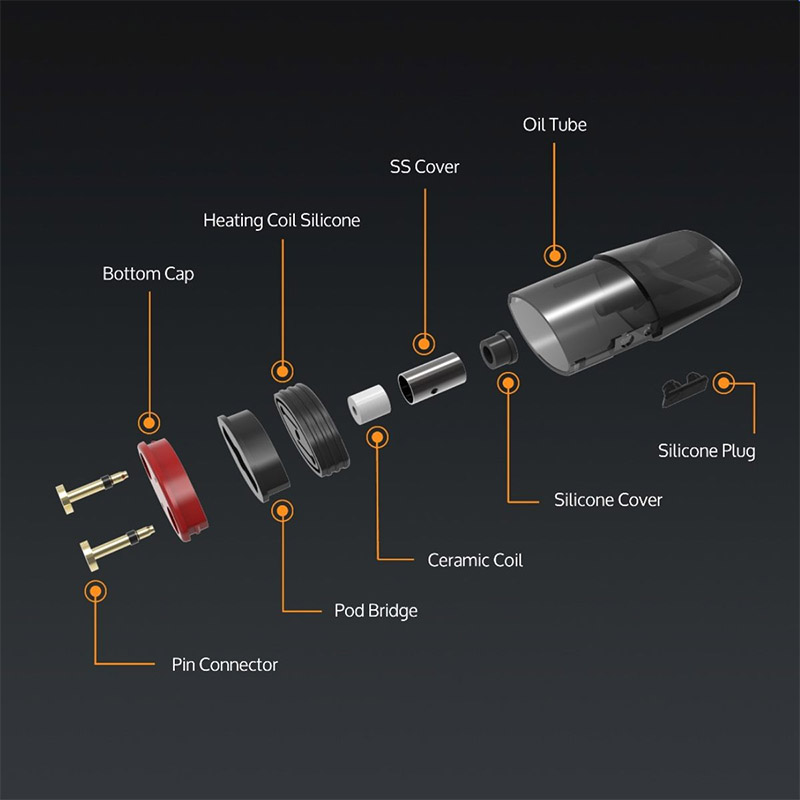
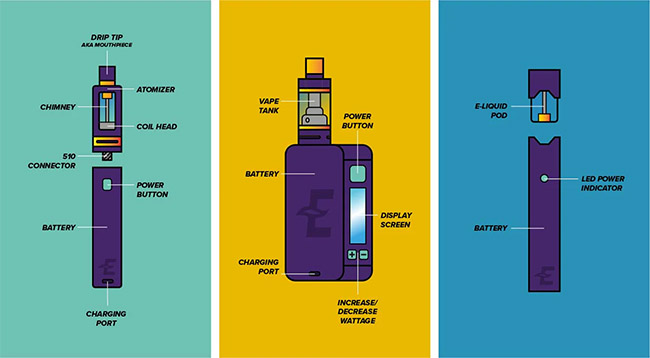
1)Atomization Assembly
Key Elements:
Coil Core:
Ceramic Core: Porous ceramic structures for precise temperature control and reduced dry hits.
Cotton Wick: Organic Japanese cotton for rapid e-liquid absorption and flavor purity.
Heating Element: Nichrome (Ni80) or Kanthal (A1) wire coils (0.6–1.8Ω resistance range).
E-Liquid Reservoir: Silica/glass fiber cotton for high-VG liquid retention (70%+ VG compatibility).
Primary Functions:
Vaporization: Converts e-liquid into aerosol via resistive heating (100–220°C operating range).
Liquid Storage: Holds 1.5–8mL of e-liquid depending on tank/pod design.
2)Electronic Assembly
Key Elements:
Battery Unit:
Integrated LiPo (3.7V, 400–1500mAh) for disposables/pods.
Removable 18650/21700 cells (20–40A CDR) for mods.
Airflow Sensor: MEMS-based pressure sensor detecting inhalation (5–30L/min flow rate).
Control Board:
Manages output (5–200W) and temperature control (Ni/Ti/SS modes).
Safety protocols: Short-circuit/overheating/over-discharge protection.
Primary Functions:
Power Delivery: Regulates voltage/wattage for customized vaping experiences.
Safety Systems: Real-time monitoring of coil resistance and battery status.
3)Structural Assembly
Key Elements:
Chassis:
PCTG/PMMA plastic for lightweight disposables.
Zinc alloy/CNC-machined aluminum for premium mods.
Connectors:
Gold-plated 510/810 threaded connectors (0.5μm coating for oxidation resistance).
Magnetic pod alignment systems (e.g., JUUL-compatible designs).
Sealing Components:
FDA-grade silicone gaskets (withstands 200°C).
IP67-rated seals for leak-resistant pods.
Mouthpiece:
Ergonomically angled drip tips (Delrin/PEI materials).
Detachable filters for nicotine residue management.
Primary Functions:
Device Integrity: Provides dust/water resistance (IP ratings).
User Interface: Tactile button feedback (0.3–1.2N actuation force).
Technical Synergy
|
Assembly |
Critical Metrics |
Failure Points |
|
Atomization |
Coil lifespan (7–30 days) |
Cotton degradation/burnt taste |
|
Electronic |
Battery cycles (300–500) |
MOSFET/PCM failures |
|
Structural |
Thread durability (5k cycles) |
Silicene seal fatigue |
Extended Notes:
Ceramic vs. Cotton Cores: Ceramic offers longevity (2x cotton lifespan) but slower wicking; cotton excels in flavor clarity.
Battery Safety: High-drain 21700 cells require dedicated chargers (0.5–2A input) to prevent thermal runaway.
Material Science: PCTG housings resist e-liquid corrosion (pH 5–8 compatibility) better than ABS plastics.
4.Common Vape Terms
1)NTP (New Tobacco Products) / NGP (New Generation Products)
NTP, also referred to as NGP (Next-Generation Products), currently encompasses three primary categories of novel tobacco products: e-liquid-based vapes, heat-not-burn (HnB) tobacco products, and smokeless tobacco products.
2) HnB (Heat-Not-Burn Tobacco Products)
HnB denotes tobacco products that heat processed tobacco at controlled temperatures (typically 250–350°C) without combustion. Heating mechanisms are categorized into:
Electric Heating (e.g., IQOS, Glo)
Carbon-Based Heating (e.g., carbon blade ignition)
Physicochemical Reaction Heating (e.g., catalytic oxidation)
Alternative Heat Sources (e.g., infrared, induction)
3)VAPE Terminology
Derived from "vapour" or "vaporize," the term vape broadly describes electronic aerosolization devices, also known as e-vaporizers, vape pens, or vape mods. Related lexicon includes:
Vaping: The act of inhaling vaporized substances
Vaper: An individual who uses vaping devices
4)E-Liquid / E-Juice
E-liquid (short for "electronic liquid") is the consumable solution vaporized in devices. Under China’s 2022 National Standard:
Domestic Market: Restricted to tobacco-flavored formulations (≤20mg/g nicotine)
Global Markets: Permits diverse flavors (fruit/dessert/menthol) with nicotine concentrations varying by region (e.g., EU TPD: ≤20mg/mL; US: typically 3–50mg/mL).
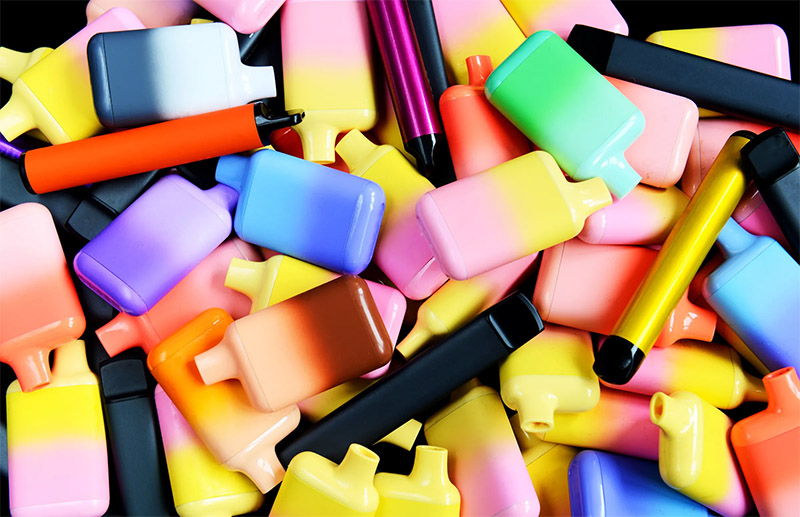
5)Disposable Vapes
Single-use, non-rechargeable devices featuring integrated components:
Battery: Lithium-polymer (LiPo) cells (300–1500mAh)
Atomizer: Pre-installed coil (1.0–1.8Ω resistance)
Pre-filled E-Liquid: 1.2–8mL capacity, offering 200–800 puffs
Market variants include flavored options (banned in China per 2022 regulations) and adjustable nicotine strengths (0–50mg/mL).
6)PUFF
In vaping contexts, puff denotes:
Action: The inhalation-exhalation cycle mimicking smoking, sans combustion
Metric: A standardized unit quantifying usage (e.g., 500-puff disposables)
Performance Descriptor: Used to characterize vapor density ("cloud production") and sensory experience ("smooth throat hit").
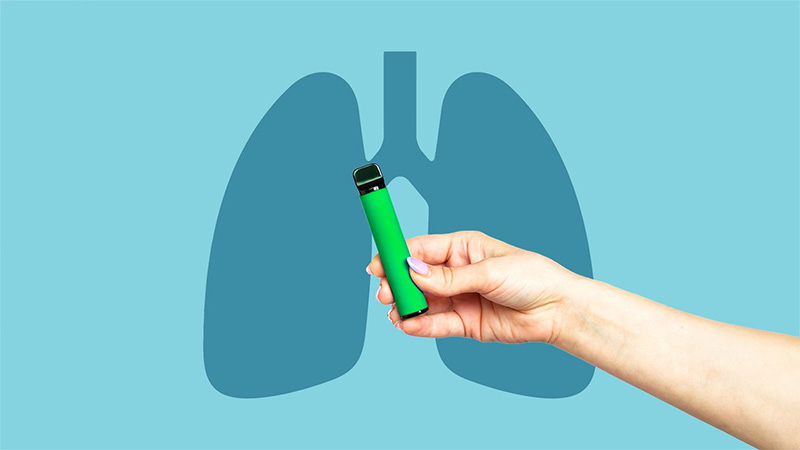
E-liquid, the essential component of electronic cigarettes, typically comprises the following ingredients:
PG (Propylene Glycol): Enhances flavor delivery and throat sensation.
VG (Vegetable Glycerin, also known as glycerol): Produces dense vapor.
Flavorings: Food-grade additives for taste customization.
Nicotine Salts: Smoother alternatives to freebase nicotine.
Additives: Includes cooling agents, sweeteners, or preservatives.
Physical Characteristics:
Appearance: Golden yellow or colorless liquid.
Aroma: Exhibits tobacco-like fragrance.
Function: When heated in a vaping device, it vaporizes into an inhalable aerosol that mimics traditional smoking.
Nicotine Pharmacology: Nicotine is a pyridine-derived alkaloid with alkaline properties. It reacts with acids to form amine salts (nicotine salts), which reduce irritation to oral and throat mucous membranes compared to freebase nicotine.
Nicotine Salt Concentrations:
Typical Range: 20–50 mg/mL.
20 mg/mL: Suitable for most casual users.
35–50 mg/mL: Targeted at heavy nicotine-dependent users.
Regulatory Limits:
≤20 mg/g (approximately 2%) nicotine concentration in vaporized products, with total nicotine content not exceeding 200 mg per device.
Other Regions: Varies by jurisdiction (e.g., EU TPD: ≤20 mg/mL; U.S.: state-specific regulations).
Nicotine Salt Synthesis:
Formed by combining nicotine with organic acids (e.g., benzoic acid, levulinic acid) in specific ratios through processes including:
Mixing: Precise stoichiometric blending.
Heating: Controlled thermal treatment (60–80°C).
Stirring: Homogenization of the solution.
Curing: Resting period for crystallization.
Variations in acid type, ratio, or synthesis methods yield distinct flavors (e.g., fruity vs. menthol) and physical forms (amorphous vs. crystalline salts).
Additive Compliance Principles:
Non-Hazardous Usage:
Additives must not introduce additional health risks under normal or foreseeable conditions.
Minimized Quantities:
Additive usage should be reduced to the lowest necessary levels.
Anti-Masking Prohibition:
Additives must not conceal product deterioration, spoilage, or quality defects.
Welcome to the inaugural installment of The Vape Essentials Series – your gateway to foundational industry knowledge. Let us now embark on a structured exploration of vaping technology and culture.
Essential Vaping Knowledge: A Must-Read Guide for Users (2)
Related Article