Can You Vape While Driving?
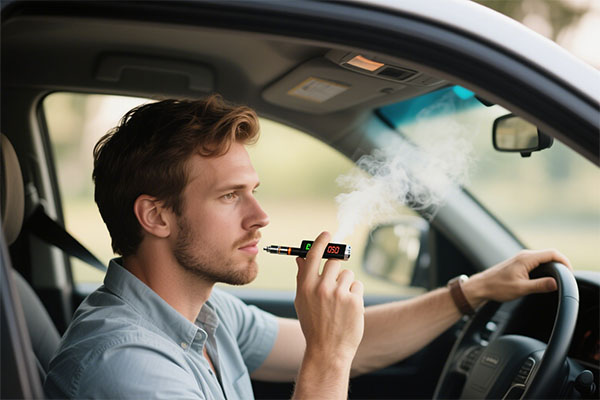
The rise of vaping as an alternative to traditional smoking has sparked debates across various aspects of daily life, including its safety and legality behind the wheel. While vaping is often marketed as a safer option than cigarettes, the act of using an vape while driving raises critical questions about road safety, legal consequences, and personal responsibility. This article explores the complexities of vaping while driving, examining its risks, legal standing in different regions, and broader implications for drivers and society.
1. Understanding Vaping and Distracted Driving
Vaping involves inhaling vapor produced by an electronic device that heats a liquid, typically containing nicotine, flavorings, and other chemicals. Unlike traditional cigarettes, vapes do not produce smoke, but they still require manual operation. Users must press buttons, refill cartridges, or adjust settings, all of which demand attention. Even a momentary distraction—such as checking the device's battery level or exhaling vapor—can divert a driver's focus from the road
Distracted driving is universally recognized as a leading cause of accidents. The U.S. National Highway Traffic Safety Administration categorizes distractions into three types: visual (taking eyes off the road), manual (removing hands from the wheel), and cognitive (mental focus elsewhere). Vaping intersects with all three. Adjusting the device requires manual interaction, glancing at it causes visual distraction, and the mental effort to operate it competes with the concentration needed for driving. A split-second lapse in attention—whether to refill a ' pod or blow vapor away from the windshield—can have catastrophic consequences.
Distracted driving is universally recognized as a leading cause of accidents. The U.S. National Highway Traffic Safety Administration categorizes distractions into three types: visual (taking eyes off the road), manual (removing hands from the wheel), and cognitive (mental focus elsewhere). Vaping intersects with all three. Adjusting the device requires manual interaction, glancing at it causes visual distraction, and the mental effort to operate it competes with the concentration needed for driving. A split-second lapse in attention—whether to refill a ' pod or blow vapor away from the windshield—can have catastrophic consequences.
2. Legal Gray Areas and Regional Differences
Laws regulating vaping while driving vary widely. Some jurisdictions explicitly prohibit it, while others lack clear legislation, creating ambiguity. For example, in the United Kingdom, the Highway Code discourages any activity that distracts a driver, including vaping, but there is no specific law banning it. Police can still penalize drivers under broader "careless driving" statutes if vaping impairs their control of the vehicle.
In contrast, parts of the United States have taken stricter measures. States like New Jersey and Arkansas prohibit vaping while driving if it leads to reckless behavior. California's hands-free laws, originally targeting mobile phone use, have been interpreted to include vaping devices in certain cases. These inconsistencies highlight a global challenge: as vaping grows in popularity, legislation struggles to keep pace with emerging technologies and habits.
Even in regions without explicit bans, drivers risk fines or legal action if law enforcement deems vaping a contributing factor in an accident. Insurance companies may also deny claims if investigations reveal vaping as a distraction. This legal patchwork leaves drivers in a precarious position, forced to navigate unclear rules while balancing personal habits with safety.
3. Physical and Environmental Risks
Beyond legal concerns, vaping while driving introduces unique hazards. The vapor produced can temporarily cloud a driver's vision, especially in enclosed vehicles. Exhaling a dense cloud might obscure the windshield or mirrors, creating blind spots. Additionally, handling hot vaping devices or spilled e-liquids could startle a driver, increasing the likelihood of sudden movements or loss of control.
Nicotine's physiological effects further compound these risks. While vaping delivers nicotine more smoothly than cigarettes, it still stimulates the nervous system. For some users, this can lead to dizziness, lightheadedness, or heightened anxiety—conditions incompatible with safe driving. Even non-nicotine 's pose risks, as the act of inhaling and exhaling deeply can affect respiratory focus, particularly during long drives.
Nicotine's physiological effects further compound these risks. While vaping delivers nicotine more smoothly than cigarettes, it still stimulates the nervous system. For some users, this can lead to dizziness, lightheadedness, or heightened anxiety—conditions incompatible with safe driving. Even non-nicotine 's pose risks, as the act of inhaling and exhaling deeply can affect respiratory focus, particularly during long drives.
4. Social and Public Health Considerations
The normalization of vaping in public spaces has extended to vehicles, often without scrutiny. Unlike smoking, which leaves lingering odors and visible ash, vaping's cleaner image may lead drivers to underestimate its dangers. This perception is problematic: treating vaping as a harmless activity while driving sets a risky precedent, especially for younger drivers influenced by social trends.
Public health experts also warn that vaping while driving could undermine efforts to position vapes as smoking cessation tools. If vaping becomes associated with reckless behavior, its credibility as a healthier alternative may erode. Furthermore, passengers—particularly children—are exposed to secondhand vapor in confined car spaces, raising ethical questions about involuntary exposure to aerosolized chemicals.
Public health experts also warn that vaping while driving could undermine efforts to position vapes as smoking cessation tools. If vaping becomes associated with reckless behavior, its credibility as a healthier alternative may erode. Furthermore, passengers—particularly children—are exposed to secondhand vapor in confined car spaces, raising ethical questions about involuntary exposure to aerosolized chemicals.
5. Alternatives and Responsible Choices
For drivers committed to vaping, mitigating risks requires proactive measures. Planning ahead—such as vaping before starting a journey or during breaks—reduces the temptation to use the device while driving. Storing the ' in the glove compartment or trunk removes visual triggers. Passengers can assist by refraining from vaping themselves, minimizing peer pressure and distractions.
Technology also offers solutions. Some newer vehicles include voice-activated systems or dashboard mounts designed to keep devices secure and accessible without manual handling. However, these tools are not foolproof; ultimately, the responsibility lies with the driver to prioritize safety over convenience.
Technology also offers solutions. Some newer vehicles include voice-activated systems or dashboard mounts designed to keep devices secure and accessible without manual handling. However, these tools are not foolproof; ultimately, the responsibility lies with the driver to prioritize safety over convenience.
Can you vape while driving?Vaping while driving sits at the intersection of personal freedom and collective responsibility. While not universally illegal, its potential to distract, impair, and endanger lives cannot be ignored. The absence of uniform laws complicates enforcement, but individual drivers must recognize that no habit—no matter how socially accepted—is worth compromising road safety.
As vaping culture evolves, so too must public awareness. Campaigns highlighting the risks of vaping while driving, paired with clearer legislation, could bridge the gap between current norms and safer practices. Until then, erring on the side of caution—saving the ' for moments when the vehicle is parked—remains the wisest choice for drivers aiming to protect themselves, their passengers, and others on the road.
The road demands undivided attention. Every decision behind the wheel, including the choice to ', carries weight. In a world where distractions are ever-present, prioritizing focus over fleeting habits is not just prudent—it's lifesaving.
Can You Buy Vapes Online? A Comprehensive Guide
Can I Vape After Lip Fillers? Understanding the Risks and Recommendations